
I drive for Uber.
I usually work the night shift. Last week, around 11 p.m., an old man got into my car. As soon as he sat down he said, “Tonight you must take me to five places. I’ll give you $500 in cash. I’ll tell you why when we’re finished.”
He gave me five addresses.
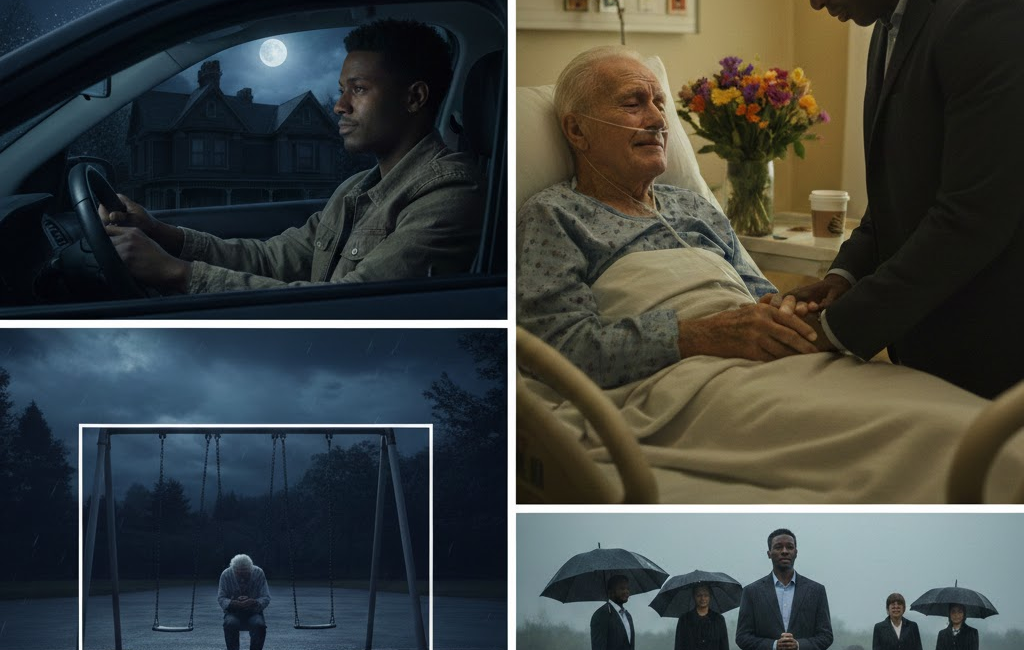
First stop — a house owned by the municipality. He stayed in the car; he didn’t get out. For ten minutes he just stared quietly at that house. Watching it made tears well up in his eyes. Then he said, “Let’s go to the next place,” and I drove on.
Second stop — a nearby primary school. The place was dark and empty. This time he did get out. He walked across the schoolyard and sat on the swing. He sat there for ten minutes, then returned to the taxi. Once he was inside he said, “I used to teach here. Forty-three years of teaching. It was the work my soul loved.”
Third stop — a restaurant. He went inside straight away and ordered a cup of coffee. He sat alone in a booth. The hot coffee came but he didn’t touch it; he just sat and looked around. After fifteen minutes he came back to the taxi and said, “My wife and I had our first date here.”
Fourth stop — the cemetery. He got out, walked to one particular grave, stood there, and spoke softly to someone. I couldn’t hear what he said. When he returned thirty minutes later his eyes were wet and red. He said, “My wife. Today is three years.”
Fifth stop — the hospital. “This is the last stop,” he told me. He asked me to park. Looking at me, he said, “I’ll tell you why I wanted to go to those five places. I have cancer — stage four. Maybe I have weeks. Maybe only days. Tonight I wanted to see my life one more time, while I still could.”
Hearing that, I felt something loosen in my chest. He continued, “That house — where I raised my children. That school — where I found my purpose. That restaurant — where I fell in love. That graveyard — where I said goodbye. And this hospital — where I’ll be admitted tonight. This hospital may be my final destination. I might not come home again.”
He put his hand in his pocket and gave me the $500. “You gave me a last journey along my life’s path. I wanted to receive somebody’s kindness one last time. You gave me that.”
I hesitated. “I can’t take this money.”
“Please,” he said. “There’s no one left to give this for me. My children don’t call. I have no friends. You gave me three hours of kindness. That’s worth more than five hundred dollars.”
He got out with a small suitcase, then turned and asked, “What’s your name?”
“Marcus.”
“Thank you, Marcus. For making the end a good thing.”
He walked into the hospital. I sat in my car, fidgeting, thinking about him.
The next morning I couldn’t stop myself — I bought flowers and went back to the hospital. I knocked on his ward door. He was in bed. When he saw me he smiled.
“Marcus, you came back.”
“I couldn’t leave it like that. Are you okay?”
“I’m dying,” he said, “but last night I saw my life again. So I’m okay.”
We talked for two hours. His wife, his students, his sons who forgot to call, the life he had lived. For the next two weeks I came every day. I brought coffee. I read him the newspaper. Sometimes I just sat quietly. He told me everything — regrets, joys, moments he wanted to live again.
“One day he said, “I thought I would die alone, but you’re here. An unknown person became like family at the end. That’s the greatest gift.”
I took his hand. “You won’t die alone,” I said. He cried.
That day came. Mr Patterson died at 3:17 a.m. on a Tuesday. I was holding his hand. His last words were, “Tell people to look at strangers. Really look. Everyone is dying. Some fast, some slow. Be kind to everyone. Like you were kind to me.”
Then his eyes closed.
I stayed for an hour. I couldn’t let go.
He died with someone by his side. That mattered.
Only six people came to his funeral: me, three nurses, a lawyer, and one former student who had seen the obituary.
That was it.
A man who taught for forty-three years, loved for fifty-two, lived to eighty-one — his final farewell had six attendees.
On the last day of the funeral I spoke: “Mr Patterson taught me something in two weeks. Every stranger can be a whole world. Every Uber rider has a story. Every passenger might be on their final trip. Every unknown person might be saying goodbye. So I will drive differently now. I will ask, I will listen, I will look. Just like an old man searched one last warm night and a stranger stayed with him. Try to be that stranger. Please.”

Other Articles