
The booth is a wooden box with a curtain and a little light. People step inside, pull the curtain, and press a button. The camera clicks and a strip of four photos pops out, small and silly and honest. On a rainy Sunday, when the fair smelled of wet straw and roasted nuts, a woman in a bright red coat came to my booth. She looked nervous and kept wiping her hands on her skirt.
“Are you open?” she asked.
“Always,” I said, smiling. “Step inside when you’re ready.”
She sat down and fidgeted with the prop hat. I told her the camera would take four pictures and she could make any face she liked. She laughed once, but it sounded like someone trying not to cry. After the photos, she left without buying more, and I handed her the strip. The last picture showed her with a small, brave smile.
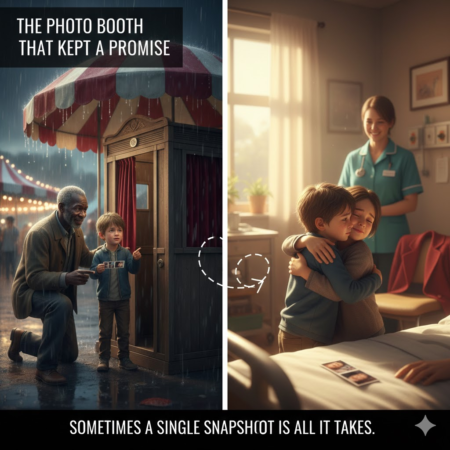
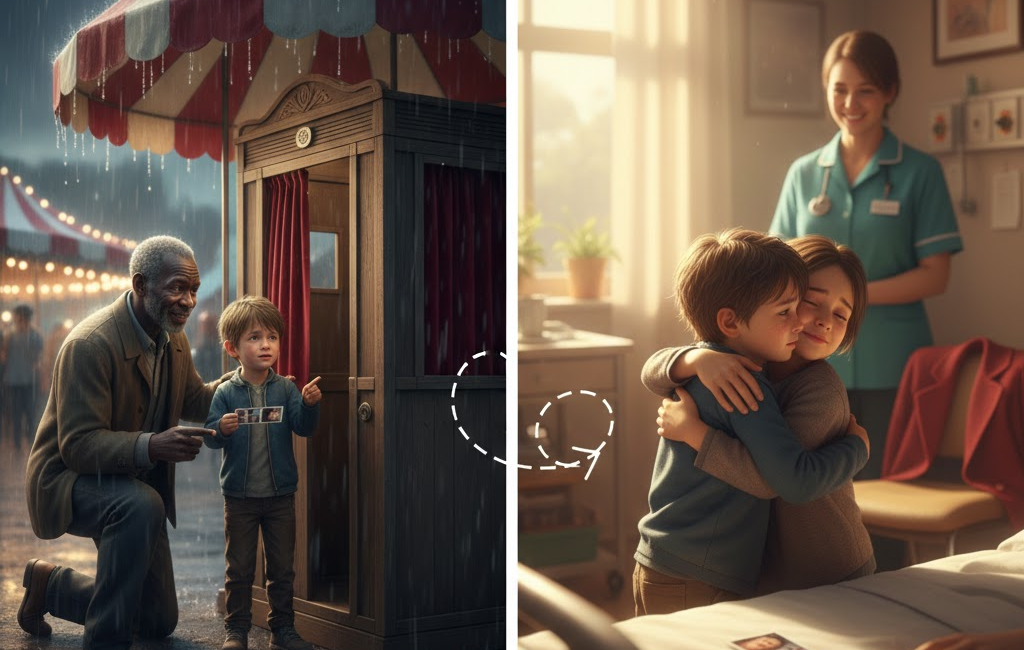
Later that afternoon a boy came running to the booth. He was about eight, hair messy, face wet from rain. He pushed the curtain and held up the photo strip. “My mum took this,” he blurted. “She left her coat here and went away. She said she’d be back but she didn’t. I think she’s sad.”
I looked at the photos again. The woman in the red coat had the same tired eyes as her son. The boy’s voice shook. His name was Tom. He said he had been staying with his aunt while his mum tried to get a job, but something went wrong. He kept looking around the fair like it might cough his mother out like a hidden coin.
I could have told him to ask the lost-and-found stall. I had a job and needed to close soon. But Tom was small and brave in the way children are when they keep holding on. I folded the photo strip into my pocket and said, “Show me where you last saw her.”
We walked through rows of stalls. The fair hummed with people buying sweets and trying their luck. Tom pointed to the food tent where the woman in the red coat had been watching the puppet show. We found a wrapper on the ground and then her coat hung over a chair like a bright flag. There was no woman.
Tom’s face fell. He clutched the photo strip like a treasure. “She said she’d come back after the show. She said never to go looking without her. I waited.” His voice was small and full of a question.
I asked people nearby if they had seen her. A stallholder with flour on his hands said she left with a bag of pastries. A man with a camera said he had seen someone help her onto a bus. Tom’s hope wavered and grew again like a small tide.
We checked the bus stop and the lost-and-found. Around dusk, the rain stopped and the fair lights blinked brighter. I walked Tom to the shelter tent near the ferry. The volunteers there keep lists of lost people and items. They told us there had been a woman matching the description and they had spoken to her briefly. She had seemed tired and said she would go to the town clinic. They gave us directions.
At the clinic a nurse recognised the woman in the photos. She had collapsed from exhaustion and they had kept her to rest. Tom’s steps nearly ran up the corridor. The nurse led us to a small room where the woman lay sleeping, the red coat folded on a chair. Her face was softer in sleep. Tom put the photo strip beside her and waited.
When she woke she looked at the strip and then at Tom. For a long minute she did not move. Then she reached out and touched his hair. Tears caught like small beads and fell. “Tom?” she whispered.
He threw himself into her arms. The sound they made was thick and old and new at once. She told him she had been trying to find work and had fainted from hunger. She had left him with an aunt who promised to call her that night, but she had been so ashamed she had not told Tom where she went. “I was scared,” she said to Tom, voice shaking. “I am so sorry.”
Tom’s grip loosened only when the nurse gave them a cup of warm tea. They sat and talked while the rain washed the windows. The woman — her name was Sara — explained how hard things had been. She had tried to hide the trouble and thought she could fix it alone. When she woke she found Tom in the waiting room with a photo in his hand.
I learned then how a small box with a camera could make people brave. Tom had kept the strip as a promise that his mother would return. It made him ask for help and that asking led to finding her. Sara held him and we sat in the clinic and waited for the social worker to call her sister for help.
After that, Sara began to come to the fair each Sunday. She volunteered at the tea tent and slowly found a job at the bakery. The photo booth kept a spare drawer with old strips of paper. Sometimes people left a note tucked behind a picture: a “thank you” or a small story. The boy Tom grew taller and helped run the booth on slow days, making faces into the camera and handing people the little paper pieces that catch a moment.
Years later, I put up a small sign above the booth: “Photos keep promises.” People laughed at the thought but many agreed. The town started a small monthly group at the community centre where people could bring lost things to show — coats, keys, photographs. They called it the Promise Box. Someone from the clinic came to talk about shame and asking for help. People began to notice each other earlier, and asked after those who seemed tired.
Sometimes a single snapshot is all it takes. A photograph can hold a face and a story and a small, stubborn hope. If you ever find a tiny photo in your pocket, don’t toss it. Look at it. Share it. It might be the small thing that brings a family back together.

Other Articles
A Fish Pond
I sell newspapers by the corner of Maple and Third.